Vermouth, and why we love it
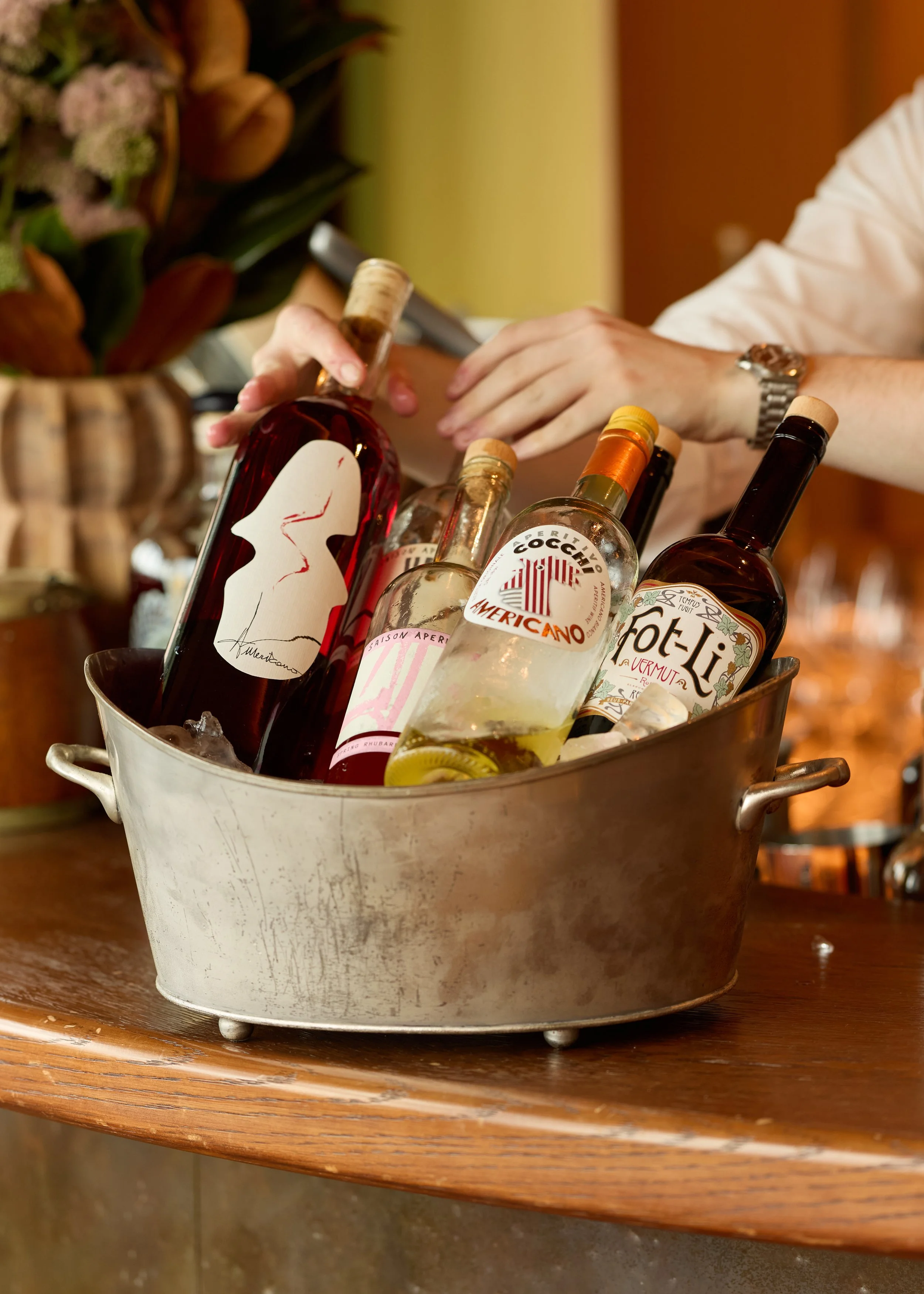
We see vermouth as the quiet glue that holds the bar together, and for the next month, we're embracing it in all its forms and origins. One of them is always wormwood (from the German wermut), which gives the category its name. At its heart, vermouth is a base wine infused with botanicals, but it's so much more. An unsung hero, you've likely imbued a style in many of your favourite drinks. It is structure, fragrance and seasoning in liquid form.
Its modern story begins in northern Italy in the late 18th century, when Antonio Benedetto Carpano began selling a sweet, spiced wine in Turin that became wildly popular. From there, the style travelled west to France, where producers refined a drier, paler expression. Spain came later to the party, but made it their own, turning vermouth into a ritual as much as a drink.
Broadly, there are two classic styles: sweet (often red or amber) and dry (typically pale). Plush and spiced sweet vermouth is the backbone of drinks like the Manhattan and the Negroni. Dry vermouth is leaner, more herbal, sometimes saline, and essential to the Martini. But the modern landscape is wider: bianco (white and gently sweet), rosé, extra-dry, and a growing wave of regional and artisanal bottlings that foreground specific botanicals or base wines.
And how else do we serve it? Neatly, over ice, in a chilled glass with a twist of orange or a fat green olive; lengthened with soda and a wedge of citrus; or stirred seamlessly into a cocktail. In any form, vermouth is ideal for a warm afternoon where sunlight catches the rim of a glass. Vermouth is not hurried. It’s an aperitif in the truest sense — an opening note, a clearing of the palate, an invitation.